THE DEPARTMENT · PASS 12 · FIELD REPORT 017
The Guy Who Shaved Absolutely Everything Before Boot Camp
A new recruit attempts a comprehensive grooming program two days before training. His skin files the first formal grievance.
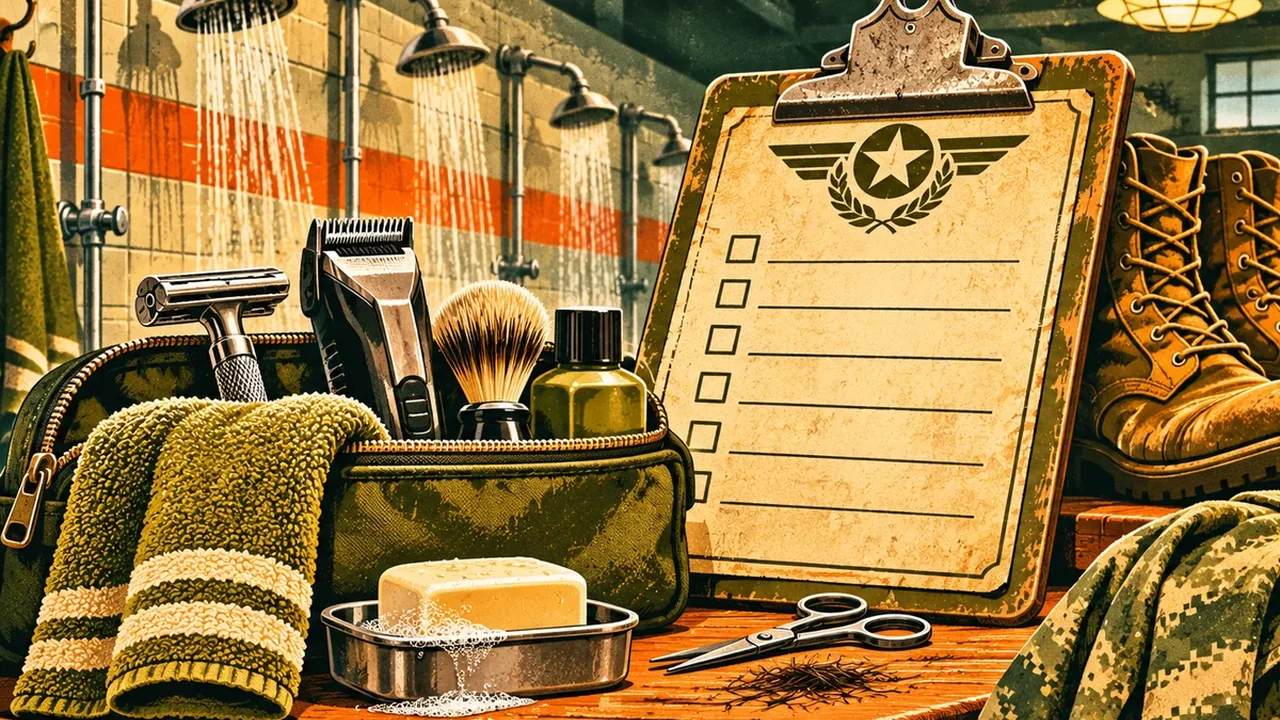
The pre-departure makeover
Our fictional recruit has watched every packing video, read six contradictory comment threads, and concluded that arriving at training requires an extraordinary personal grooming initiative. His plan includes a haircut, trimmed nails, a new razor and a level of precision that would be more appropriate for maintaining an aircraft engine.
The face is shaved, the body is trimmed, and then ambition takes the steering wheel. Why stop at “presentable” when one could achieve “freshly resurfaced”? The result is a schedule of personal maintenance that no recruit training environment is likely to support.
By the time his duffel is zipped, his skin is holding an emergency meeting.
The serious problem with overdoing it
Body-hair grooming can cause nicks, irritation, ingrown hairs and rashes. The American Academy of Dermatology recommends careful technique, clean tools, and avoiding unnecessarily risky grooming practices. Its published guidance notes that grooming-related injuries are not rare.
Trying a new close shave immediately before an intense period of sweat, movement, shared washing and tight clothing is a poor time to learn that your skin dislikes your methods.
There is no universal military rule requiring recruits to remove their pubic hair. Specific service grooming rules focus on defined appearance standards, but that does not amount to a branch-wide “downstairs landscaping” order.
The imaginary maintenance schedule collapses
Our fictional recruit intends to preserve his smoothness throughout training. He has allocated 22 minutes per morning for a meticulous ritual, including a mirror, specialty moisturizer, several tools and an encouraging playlist. His schedule then collides with a real training day.
He is now in possession of three things: very little time, an unfamiliar bathroom and a determination that has outlived its usefulness. The grooming program is abandoned before the equipment has even reached full operational readiness.
The Department estimates that his optimism has exceeded his logistical capacity by 700%. That is a made-up figure, naturally, and the only one we intend to publish.
The practical version of the joke
If you choose to trim, use clean personal equipment and work carefully. Avoid sharing razors or rushing sharp tools across sensitive skin. Dermatologists recommend shaving in the direction of hair growth, using appropriate lubrication and reducing irritation.
If the skin is already inflamed, it may be wiser to stop irritating it and consult a healthcare professional for persistent or worsening symptoms. Do not treat painful cuts or rash as a rite of passage.
And if the training environment has restrictions on personal items, follow them. A complete personal grooming laboratory is not part of the normal packing list.
The after-action report
The recruit eventually learns that military readiness has less to do with elaborate grooming than getting to the right place on time, following hygiene guidance, and taking care of the body he already has.
The Department of Unnecessary Military Statistics issues a plaque for “Most Ambitious Pre-Arrival Hair Removal Plan” and stores it in a cabinet marked Projects Nobody Authorized.
Final finding: your skin is equipment too. Do not put it through an unnecessary stress test the week training starts.
Source notes and corrections
These references support the factual points described. They do not establish our invented scenes or metrics. Training procedures change: confirm current unit guidance directly.
- American Academy of Dermatology — preventing pubic-hair trimming injuries
- American Academy of Dermatology — shaving technique and razor-bump prevention
See our editorial standards and contact the editors with corrections.