THE DEPARTMENT · PASS 12 · FIELD REPORT 016
The Great Going-Commando Field Experiment
One recruit considers ditching the underwear. The Department prepares a friction report and a ceremonial resignation.
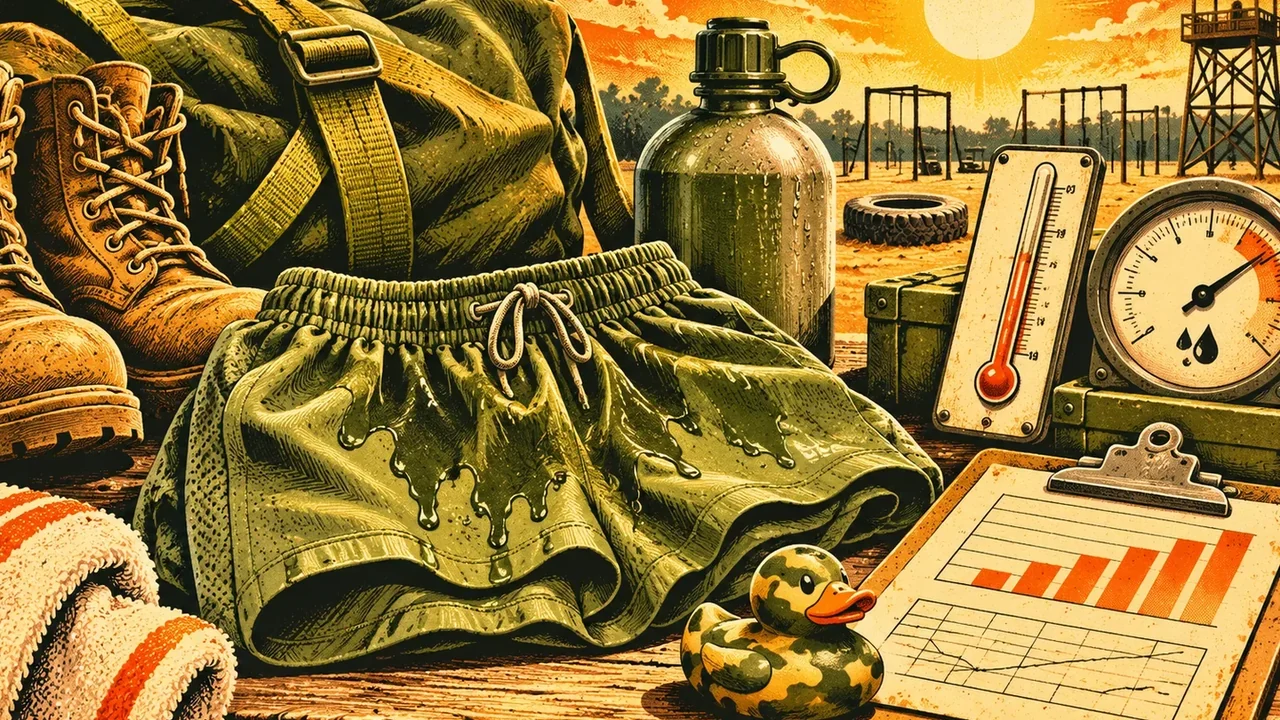
The theory of tactical freedom
In every shared living environment, someone eventually becomes the unofficial inventor of a lifestyle solution. Our fictional recruit decides that underwear is an unnecessary intermediary between body and uniform, and that removing it will improve comfort, ventilation and personal freedom.
This theory is developed with no field testing, no fabric expertise, and the confidence normally reserved for people who just bought an impractical motorcycle outside the base gate.
Our fictional Department immediately calls the proposal Operation Minimal Fabric and orders an assessment of friction, seams, sweat and the spectacular optimism of young adulthood.
What actually happens when skin meets fabric
Skin irritation can result from repeated rubbing, particularly with sweat and poorly fitting clothing. Chafing may affect the thighs and groin during high-movement activities. The practical questions are whether clothing fits properly, whether it keeps moisture against the skin, and whether seams create pressure.
None of these questions can be answered by the slogan “less fabric equals better.” Sometimes the right base layer reduces friction; sometimes a particular garment adds to it. Training rules and issued clothing requirements are separate from personal preferences.
Cleveland Clinic guidance emphasizes reducing moisture and friction, maintaining clean skin and using appropriate garments or protective products where suitable.
The theoretical ruck march
For the field experiment, imagine a long march in warm weather. The recruit starts optimistic. At the first checkpoint he reports feeling unusually free. By the second, he is aware of every seam in his trousers. By the third, he has written an angry internal letter to the inventor of abrasive stitching.
No actual experiment was conducted. No test subjects were recruited. The Department’s chart is based entirely on the principle that an overconfident plan becomes less attractive after several thousand steps.
A responsible article would not encourage readers to violate equipment rules for the sake of a comedy experiment, and neither do we.
A more useful field checklist
Use the permitted undergarments or support options appropriate to your assignment. Choose good fit where options exist, wash and dry gear, change out of wet garments when possible, and seek medical advice for persistent rash or skin injury. In training, check with the chain of command or medical personnel about approved alternatives.
Avoid the temptation to treat pain as a character-building challenge. Pain can indicate that something needs attention, and skin injury can worsen if ignored.
The Department would also like to discourage treating the barracks laundry room as an innovation lab.
The final decision
The fictional quartermaster declares that underwear will remain on the packing list pending further study, provided that nobody asks what the study costs. Our recruit accepts this ruling and discovers the appeal of a garment that keeps certain disagreements between skin and trousers to a minimum.
The field report concludes with an extremely unmilitary sentiment: people have different bodies, and comfort is not a competition.
Final finding: follow local clothing rules and prioritize friction control over experiments inspired by a five-minute internet video.
Source notes and corrections
These references support the factual points described. They do not establish our invented scenes or metrics. Training procedures change: confirm current unit guidance directly.
- Cleveland Clinic — chafing causes, moisture and prevention
- U.S. Army — training and foot-march environment
See our editorial standards and contact the editors with corrections.